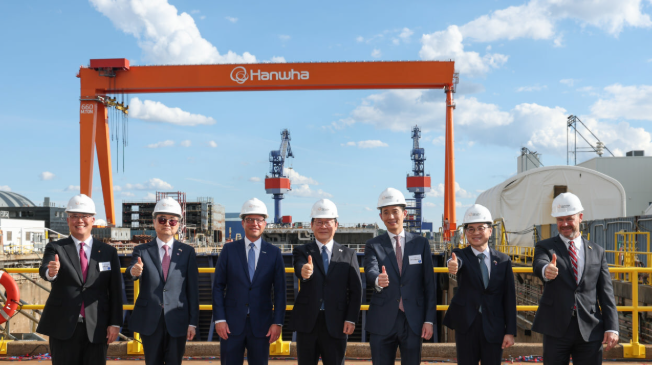
The ceremony followed discussions between South Korean President Lee Jae Myung and U.S. President Donald Trump, reinforcing a trade agreement that includes significant investments in American shipbuilding. Hanwha Philly Shipyard is poised to be a key hub for collaboration between the two nations, fostering advancements in maritime technology and production.
Hanwha Vice Chairman Dong Kwan Kim emphasized the partnership’s importance, stating: “Today’s christening ceremony is the embodiment of our two nations working side by side to reindustrialize for the sake of shared security and prosperity. This is just the beginning. Hanwha is committed to being a partner in building the next chapter of American shipbuilding.”
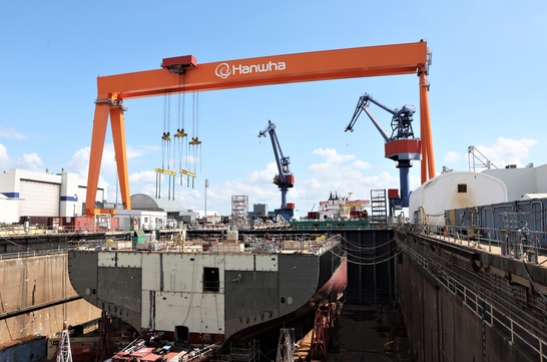
Hanwha acquired the Philly Shipyard in 2024 for $100 million, establishing it as a cornerstone for U.S. shipbuilding. The $5 billion plan includes adding two docks and three quays to boost capacity, with considerations for a new block assembly facility. These upgrades aim to increase the shipyard’s annual output from fewer than two vessels to up to 20, focusing on liquefied natural gas (LNG) carriers, naval modules, and, eventually, naval vessels.
Additionally, Hanwha Shipping, the U.S. subsidiary of Hanwha’s maritime division, has ordered ten medium-range oil and chemical tankers from Hanwha Philly Shipyard, with delivery expected by early 2029. Ryan Lynch, President and CEO of Hanwha Shipping, noted: “We are able to order these U.S.-made MR tankers because of Hanwha’s investment in building a world-class shipyard in Philadelphia.” These vessels, designed to comply with the U.S. Jones Act, will transport crude oil, refined petroleum, and chemicals, marking the largest U.S. commercial vessel order in over two decades.
Hanwha Shipping also secured an order for a second LNG carrier, following a contract for the first U.S.-ordered, export-market-viable LNG carrier in nearly 50 years. These carriers, built through a joint effort between Hanwha Ocean and Hanwha Philly Shipyard, will support the export of U.S.-sourced LNG to international partners.
This investment enhances the U.S. shipbuilding industry by modernizing infrastructure and increasing production capacity. It supports job creation and sustainable maritime development, strengthening economic and industrial ties between the U.S. and South Korea.