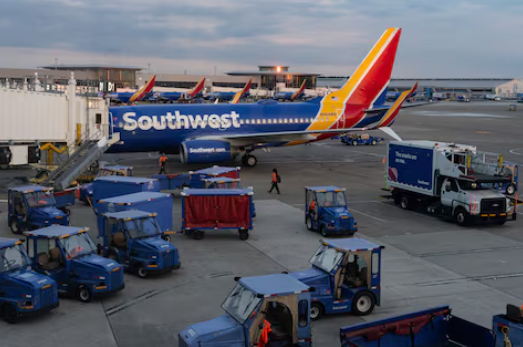
Southwest Airlines planes and vehicles sit on the tarmac at Nashville International Airport in Nashville, Tennessee, U.S., July 30, 2025.
Speaking at a Morgan Stanley conference, Jordan noted that while wide-body aircraft would eventually be required for intercontinental routes, the airline could initially adopt a “more risk-tolerant” strategy by using narrow-body jets. He added: “We want to serve those destinations as well,” but emphasized that planning is still in the early stages.
The Dallas-based airline, which primarily operates domestic services with its Boeing 737 fleet, has faced challenges regaining momentum after the COVID-19 pandemic. Earnings have remained under pressure, prompting the company to revise its business model. Recent changes include introducing fees for checked baggage, launching a basic-economy fare, and preparing to shift from open seating to assigned seating in January.
Jordan has previously highlighted the company’s interest in routes to Europe. Analysts point out that the absence of long-haul international flights has limited Southwest’s appeal among certain travelers and reduced access to high-margin revenue opportunities. Since February, the airline has established partnerships with carriers including Icelandair, China Airlines, and EVA Air to extend its global reach. It has also indicated plans to pursue additional collaborations worldwide.
Despite these alliances, Jordan stressed that Southwest intends to operate its own long-haul flights. Expanding into destinations such as London would help the company retain customers who currently choose competitors like Delta and United Airlines, both of which already operate extensive international networks and offer premium services.
Southwest, once recognized for 47 consecutive years of profitability before the pandemic, has struggled to achieve sustained earnings in recent years. Its margins remain lower compared to rivals, underscoring the need for strategic adjustments.
The introduction of premium lounges is part of Southwest’s broader effort to attract higher-spending customers. According to Jordan, such lounges could also strengthen the company’s loyalty program by increasing the value of co-branded credit cards. “If we're going to continue to drive relevance, even as the largest domestic carrier, we've got to continue to meet the needs of our customers,” he said.
Southwest’s planned initiatives mark a shift from its traditional low-cost, domestic-focused model toward a more diversified offering aimed at long-term competitiveness. With customer demand evolving, the company’s new strategy seeks to balance cost control with expanded services that meet a wider range of traveler expectations.