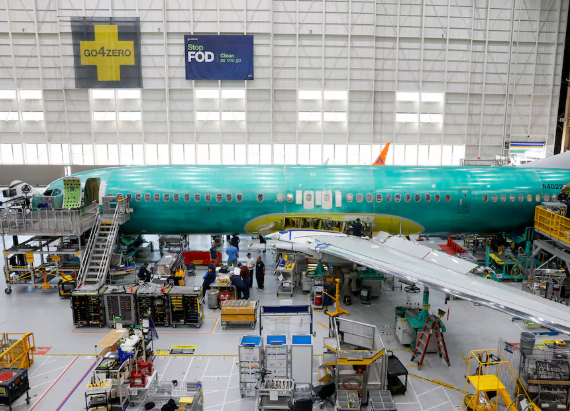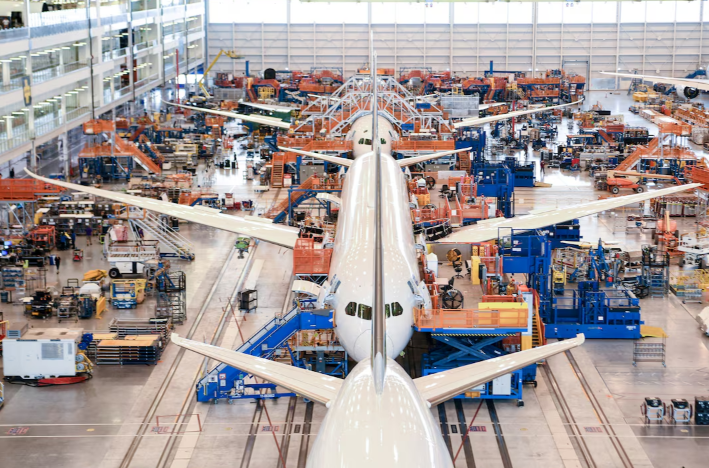
Boeing employees assemble 787s inside their main assembly building on their campus in North Charleston, South Carolina, U.S., May 30, 2023.
The expansion reflects Boeing’s effort to meet growing global demand for long-haul aircraft, driven by a surge in international air travel. Airlines worldwide are renewing and expanding their fleets to accommodate the rebound in passenger traffic. Boeing’s 787 Dreamliner remains one of the company’s key products in the widebody market, with a strong order backlog of nearly 1,000 aircraft.
According to the company, the expansion project represents an investment of around $1 billion, which will effectively double the manufacturing footprint of the North Charleston site. This facility is currently the primary production base for the 787 Dreamliner and a major component of Boeing’s global manufacturing network. The investment will support the company’s plans to enhance efficiency, increase output capacity, and improve delivery performance in response to sustained demand growth.
The decision to expand also comes amid heightened competition with European rival Airbus (AIR.PA). Airbus has announced its intention to raise production of its competing A350 widebody model to 12 aircraft per month by 2028. Both companies are seeking to capture a larger share of the recovering long-haul aviation market, where airlines are prioritizing newer, more fuel-efficient jets to reduce operating costs and meet environmental targets.
Boeing’s 787 Dreamliner, known for its fuel efficiency and lightweight composite structure, continues to attract strong interest from carriers worldwide. The increase in output will help Boeing fulfill pending orders more quickly while aligning production levels with the industry’s post-pandemic recovery trends.
Boeing emphasized that the North Charleston expansion forms part of its broader strategy to strengthen its U.S. manufacturing base and ensure a reliable supply chain to support long-term growth. The company also noted that the project is expected to generate additional employment opportunities in the region and further integrate advanced production technologies.
Overall, the expansion underscores Boeing’s commitment to meeting rising global demand for widebody aircraft while maintaining competitiveness in the international aviation market. With the 787 production increase planned for 2026, Boeing aims to position itself strongly to serve airlines seeking efficient aircraft to support future fleet modernization and international route expansion.