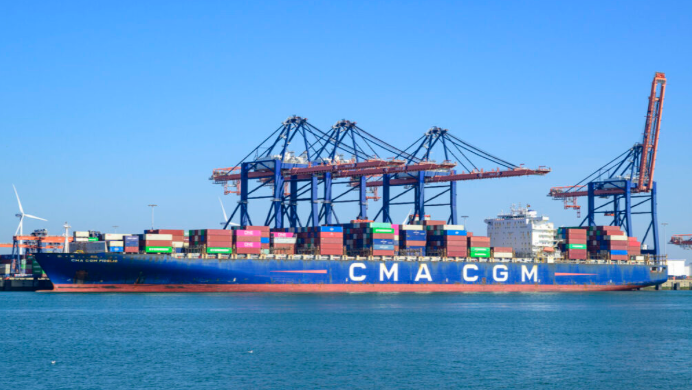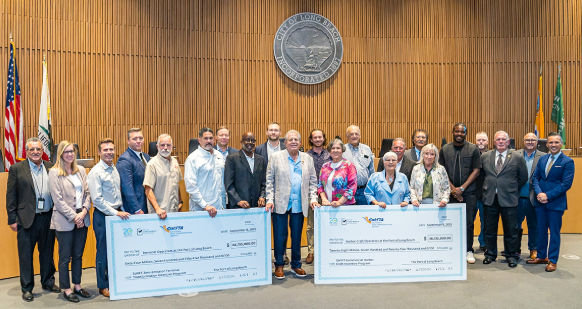
SWIFT is designed to enhance goods movement while reducing environmental impacts on nearby communities. Of the total investment, $93.4 million will go toward acquiring 65 fully zero-emissions cargo-handling equipment units, installing supporting charging infrastructure, and assisting harbor craft operators in replacing 37 marine engines with cleaner or zero-emission models.
In addition, $8.3 million will be allocated for the design of zero-emissions infrastructure at SSA Terminals at Pier A and Pacific Container Terminal at Pier J. These efforts represent a critical step toward the port’s long-term goal of achieving fully zero-emissions operations.
Mario Cordero, CEO of the Port of Long Beach, said: “The Port of Long Beach is on the road to zero emissions, leveraging demonstration projects, investments and grants to reach a greener future.”
Frank Colonna, President of the Long Beach Harbor Commission, added: “A core value of the Port of Long Beach is to support good-paying jobs while also making strides to protect the environment. This helps our industry partners invest in new, cleaner equipment so they can continue their work to efficiently move cargo at the nation’s busiest port complex, while also laying out a path to zero emissions at two of our terminals.”
The Port of Long Beach has been a leader in sustainability programs for nearly two decades. Since 2005, its initiatives have reduced diesel particulate matter emissions by 92%, nitrogen oxides by 71%, and sulfur oxides by 98%, all while container traffic increased by 20% over the same period. These results highlight the port’s ability to balance environmental improvements with growing trade volumes.
Industry analysts note that investments like SWIFT demonstrate how U.S. ports are preparing for the transition toward zero-carbon operations. By integrating advanced equipment, modern infrastructure, and cleaner engines, POLB is reinforcing its role as a key logistics hub while minimizing environmental impacts.
The combination of federal, state, and port-level funding ensures that operators and tenants have access to the resources needed to adopt next-generation equipment. The deployment of 65 new zero-emissions units and infrastructure at critical terminals is expected to accelerate this shift, providing a foundation for broader adoption across the port complex.
With this investment, the Port of Long Beach continues its trajectory toward greener operations, positioning itself as a model for sustainable freight movement. The initiative reflects a balance between supporting trade efficiency, protecting surrounding communities, and advancing environmental goals.